DATASCI 415
Syllabus
Course description
DATASCI 415 (previously STATS 415) is an introduction to machine learning (ML). At a high-level, the course consists of three parts:
- supervised learning: This part of the course covers classical (non-neural) methods for supervised learning. It is based on the first 9 chapters of Introduction to Statistical Learning with Applications in Python (ISLP).
- Deep learning: This part introduces neural learning algorithms. It loosely follows the second part of Dive into Deep Learning (D2L).
- Unsupervised learning: This small part covers classical methods for unsupervised learning. It is based on chapter 12 of ISLP.
The course is roughly split 50/40/10 between the three parts respectively.
Prerequisites: The course is taught at a similar level as its EECS counterpart EECS 445. You should have a good grasp of vector calculus (at the level of MATH 215), linear algebra (at the level of MATH 214/217), and probability (at the level of STATS 412/425). We shall review relevant concepts as they arise, but this should not be the first time you see them.
References and textbooks
The main reference for the first and third parts of the course on statistical learning is ISLP. Other good references are
- Elements of Statistical Learning (ESL): this is the more advanced version of ISLP. It covers many of the same topics as ISLP but with more mathematical details.
- Stanford’s CS 229 lecture notes on machine learning. IMO the best set of lecture notes on ML out there (I may be a bit biased because I took Andrew’s class), but they are for master’s students, so some parts may not be accessible to some of you with weaker technical backgrounds.
The main reference for the second part of the course on deep learning is D2L. There are many books on deep learning (see the STATS 315 website for some refs), but deep learning advances so rapidly that the most up-to-date refs are often not textbooks. We shall post links to relevant papers and blog posts on the course schedule.
Course staff
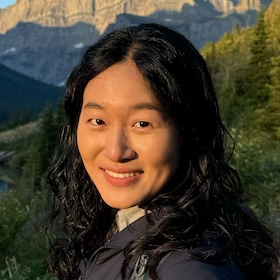

Samuel Rosenberg
Tu 8:30–10 AM ET in B760 East Hall,
Th 1:30–3 PM ET in G219 Angell Hall
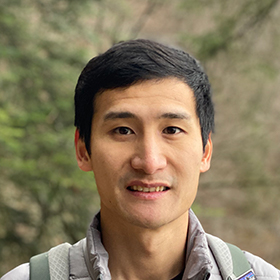
Yuekai Sun
MW 4–5:30 PM ET in 1200 Dow Chemistry Lab (CHEM),
Tu 4–5:30 PM ET in 271 West Hall,
umich.zoom.us/my/yuekai

Grading
Your grade is determined by your overall score: the max of
- 20% problem sets, 20% midterm, 60% project,
- 20% problem sets, 40% midterm, 40% project.
Students who obtain overall scores of at least 90%, 80%, and 70% will receive grades of at least A-, B-, and C- respectively. We may lower the cutoffs at the end of the semester, but we will not raise them.
Problem sets
Problem sets are assigned weekly on Fridays and due at noon ET the following Friday. If you need an extension on a problem set, you must contact the course staff at least 24 hours before the due date. We want you to complete the problem sets because they are an integral part of the course, so we are generous with extensions. On the other hand, we do NOT accept late problem sets.
You must typeset your solutions with LaTeX. If you submit handwritten solutions to a problem set, 1 pt will be deducted from your score on the problem set. To help you get started, we shall make the LaTeX markup of the problem sets available. If you are new to LaTeX, we recommend editing LaTeX documents on Overleaf. The Overleaf documentation is also a great place to learn LaTeX. In fact, when you search for LaTeX related searches, the Overleaf documentation is often one of the first results that come up!
Grading: Problem sets are graded on a scale of 1 to 4. Each problem in a problem set is graded from 1 to 4: 4 pts = essentially correct, 3 pts = minor mistakes (solution is qualitatively correct), 2 pts = on the right track, 1 pt = FUBAR. Your grade on a problem set is the average of your grades on the problems. You are encouraged to collaborate on problem sets with classmates, but the final write-up (including any code) must be your own.
Midterm
There is an in-class midterm on Wed, Nov 6. It covers the first part of the course on classical (non-neural) methods for supervised learning and deep learning basics. The midterm is closed-book, but you are allowed a single (letter-sized) handwritten sheet of notes (front and back).
Keeping up with the course online
We strongly suggest you take the course in-person, but the course is set up so that you can keep up online if necessary. Most course material is available on the course website, so please check it regularly for updates. You can also
- view lecture and lab recordings on Canvas/YouTube,
- communicate with the course staff and other students on Slack,
- submit assignments on Canvas.
Academic misconduct
The College of LSA prohibits all forms of academic dishonesty and misconduct. Minor infractions usually lead to zero credit on the assignment and a one letter grade reduction; more serious or repeated infractions will result in a failing grade and additional sanctions imposed by the Office of the Assistant Dean. For more information, including examples of behaviors that are considered academic misconduct and potential sanctions, please see LSA’s Community Standards of Academic Integrity.
Accommodations for students with disabilities
We work with Office of Services for Students with Disabilities to determine appropriate accommodations on an individual basis. Please follow the instructions on their website to request accommodations.