Projects
Methodologies
Stochastic/Robust Optimization
Multi-agent Bilevel Optimization
Network Optimization and Interdiction Games
Integer Programming
Applications
Transportation & Logistics
Energy Systems
Earth-to-Space Supply Chains
Computing Hardware-Software Co-Design
Current Projects
NSF, CISE-2615387, “FET: Neuro-Symbolic Reasoning for Verified Hardware-Software Co-Design”, 2026-2029, Nathan Bleier (PI), Yatin Manerkar (Co-PI), Siqian Shen (Co-PI).
NSF, ECCS-2533775, "CPS: Small: Advancing Bilevel Optimization for Multi-user Cyber-Physical Systems under Uncertainty and Trust Ambiguity”, 2025-2028, Siqian Shen (PI), Ruiwei Jiang (Co-PI), and Xi Jessie Yang (Co-PI).
NSF, CMMI-2533057, "Optimization, Risk Management and Adaptation for Integrated Infrastructure Systems under Technological and Policy Uncertainties”, 2026-2028, Siqian Shen (PI).
Center for Connected and Automated Transportation of the U.S. Department of Transportation, “Towards an Efficient Robotaxi Deployment,” (with Sina Bahrami (PI), Yafeng Yin (Co-PI), Yu Nie (Co-PI)), 2025-2026.
Some Past and Ongoing Research
Trust-informed Decision Making; Multi-sourced Stochastic Contextual Optimization (sponsor: IOE internal funding)
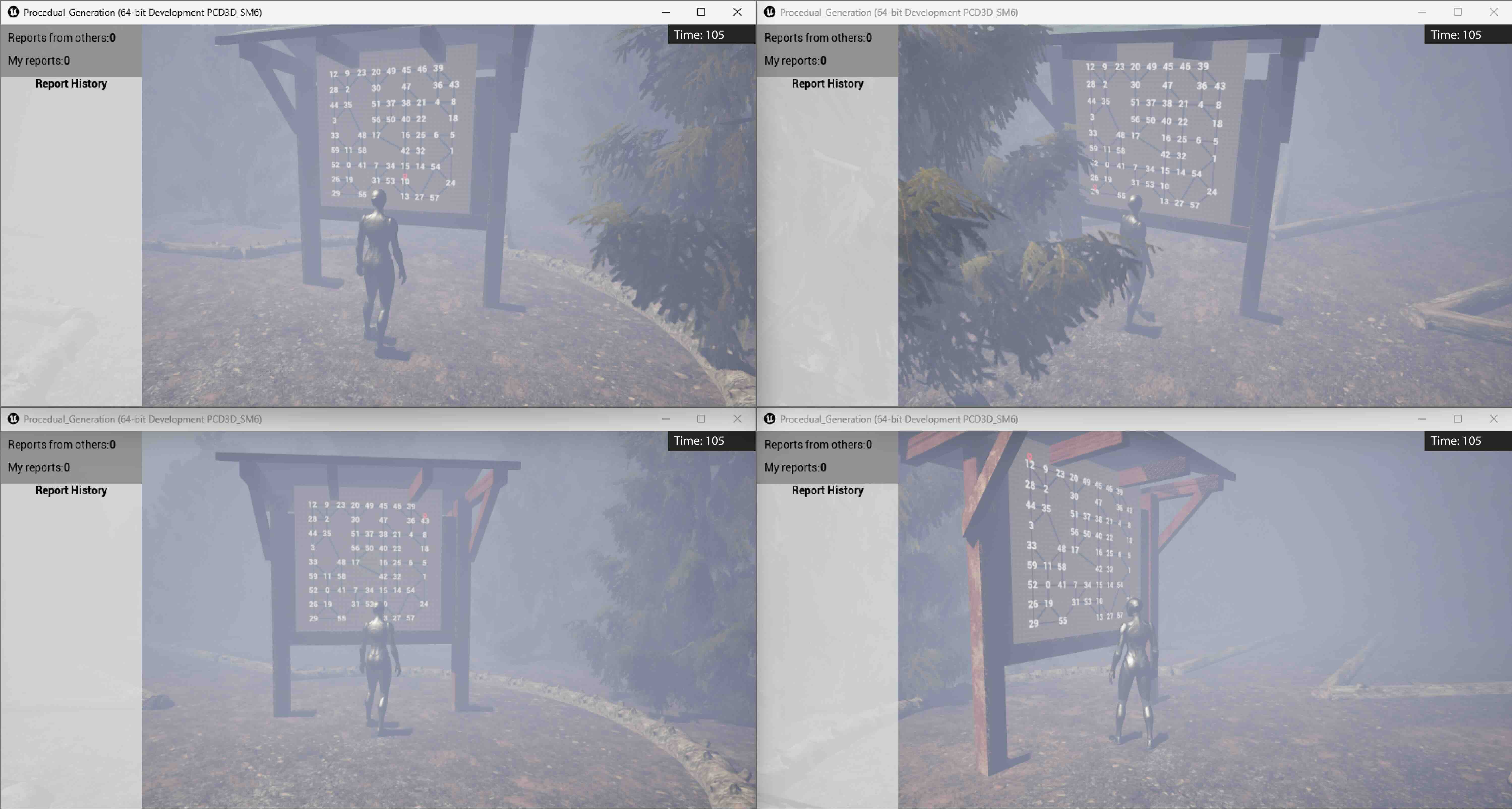
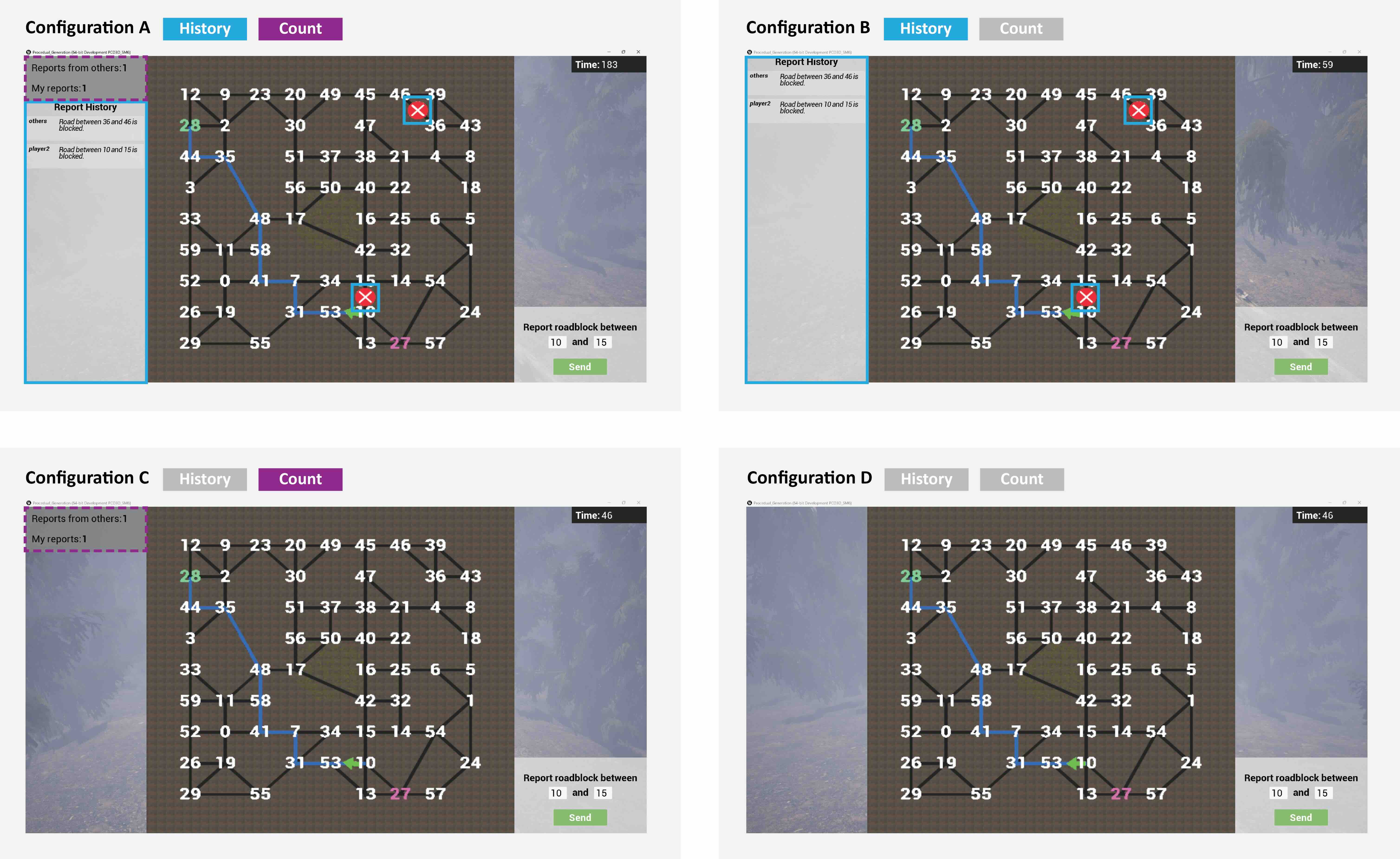
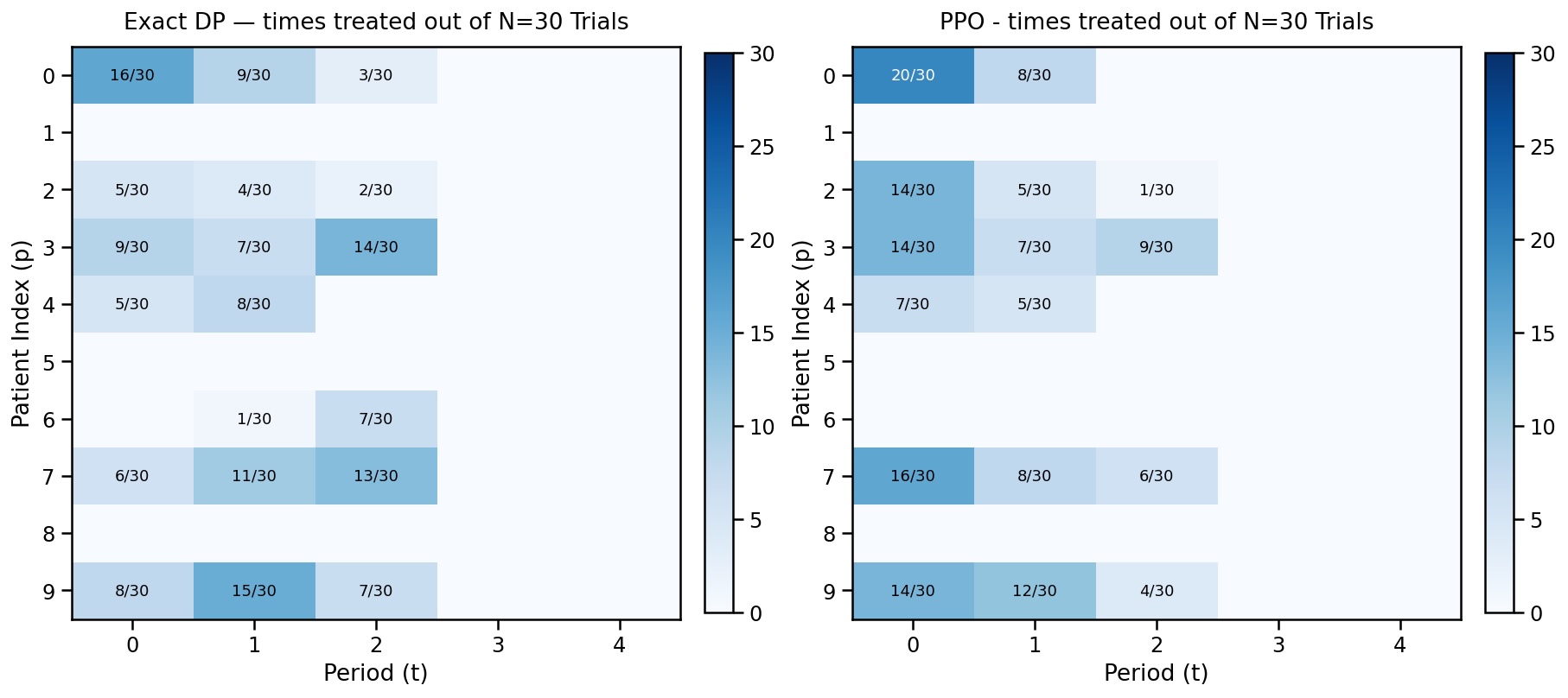
We consider problems (i) where decisions are optimized under unknown trust from human and thus may not be fully implemented, and/or (ii) where the environment information is changing and stochastic, but multiple data sources predict it with different unknown accuracies. We deveolop models, algorithms, and trust learning schemes to optimize decisions for these cases and demonstrate our approaches using applications in evacuation planning and in healthcare resource allocation.
(Collaborators: Xi Jessie Yang, Ruiwei Jiang for evacuation planning, route recommendation and Brian Denton for medical and healthcare applications.)
Multi-agent Framwork for Supply Chain Risk Management; Earth-to-Orbit Supply Chain Design and Optimization (sponsor: NSF CMMI-2034974, UM OVPR's Bold Challenge Award)
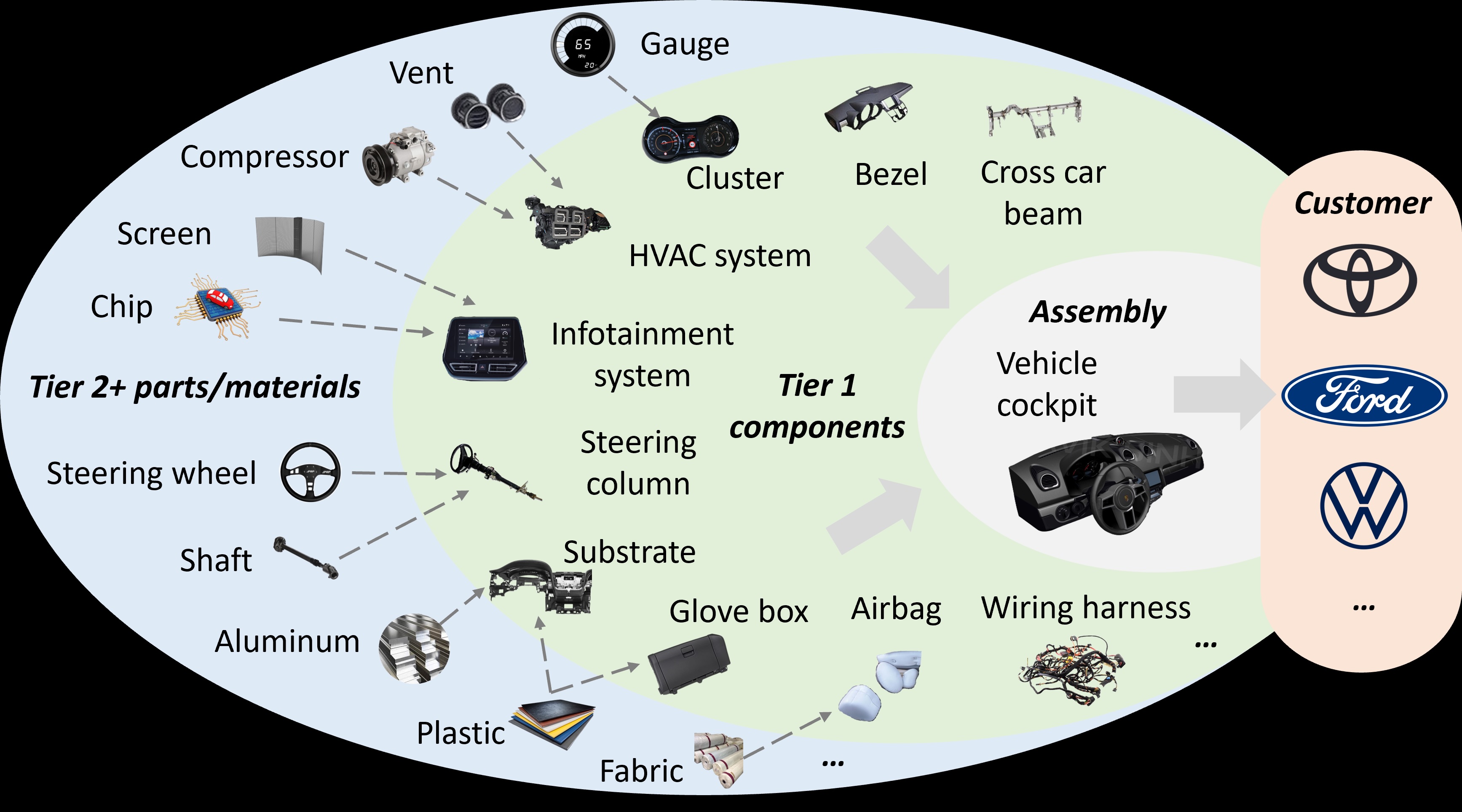
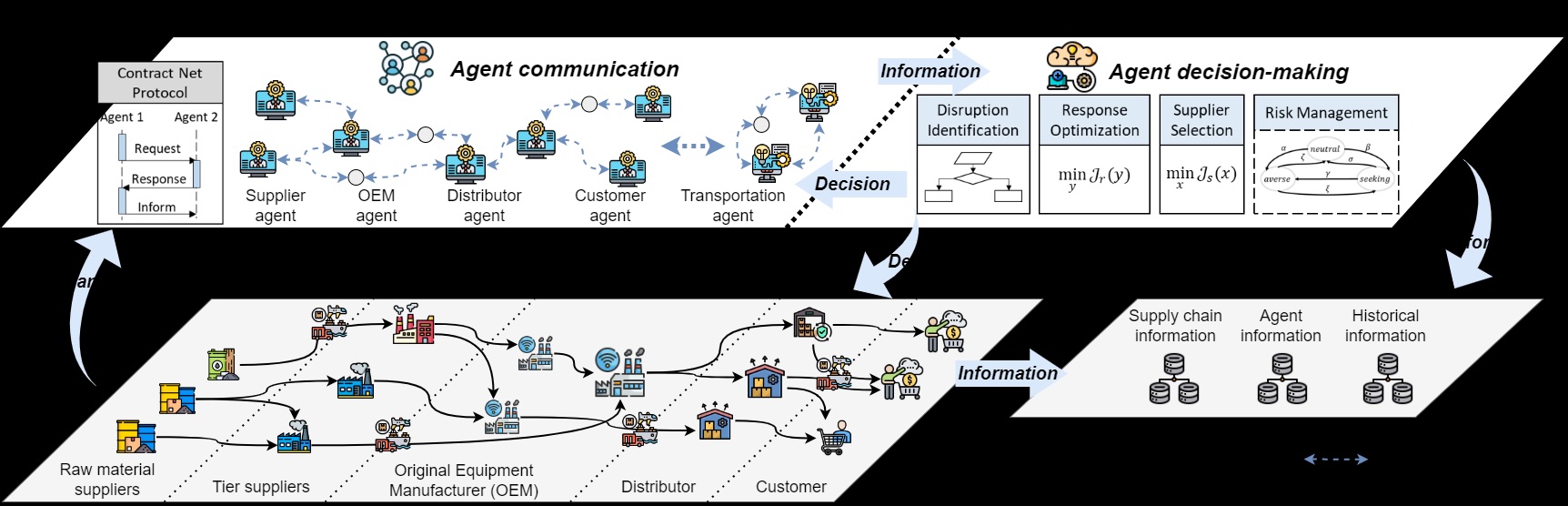
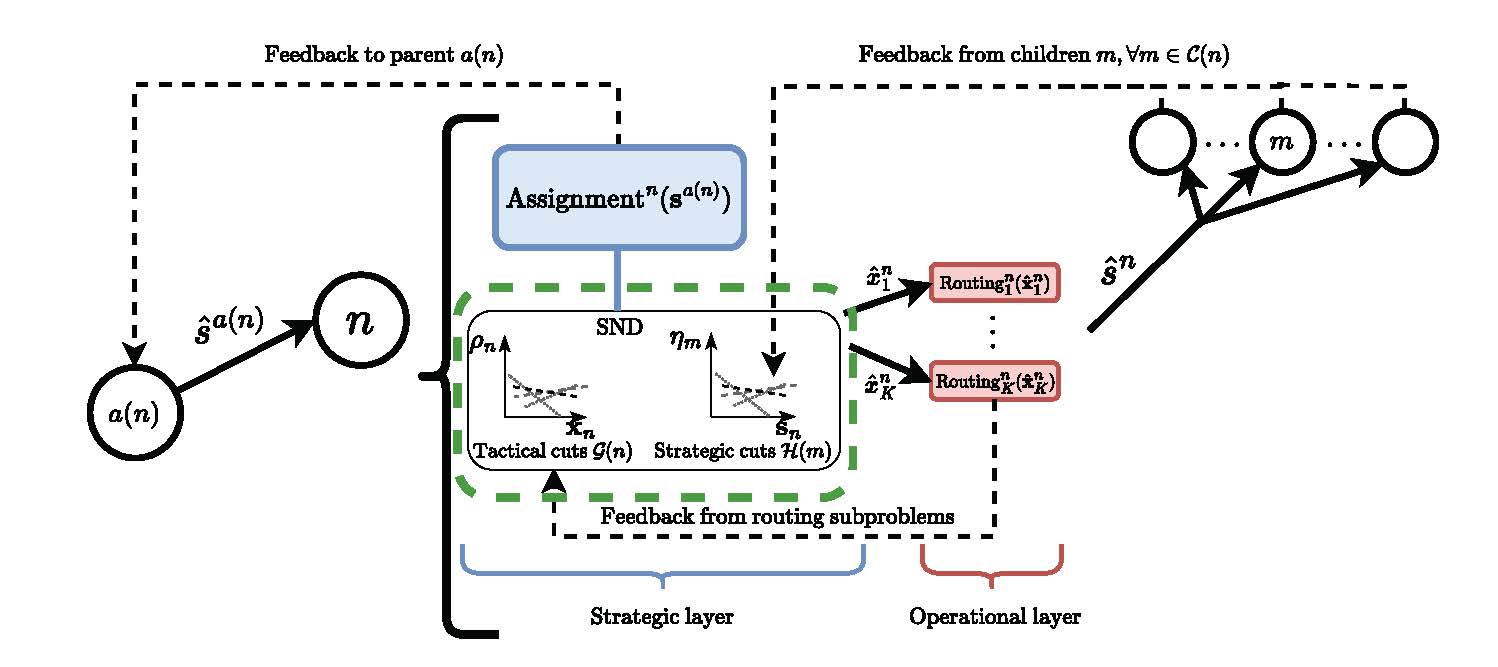
We develop a distributed control and stochastic optimization framework with modeling flexibility, communication transparency, and the ability to respond to supply chain disruptions. The approach is validated through real-world case studies in automotive manufacturing. This research was sponsored by NSF grant CMMI-2034974 with collaborators: Kira Barton and Dawn Tilbury at U of Michigan.
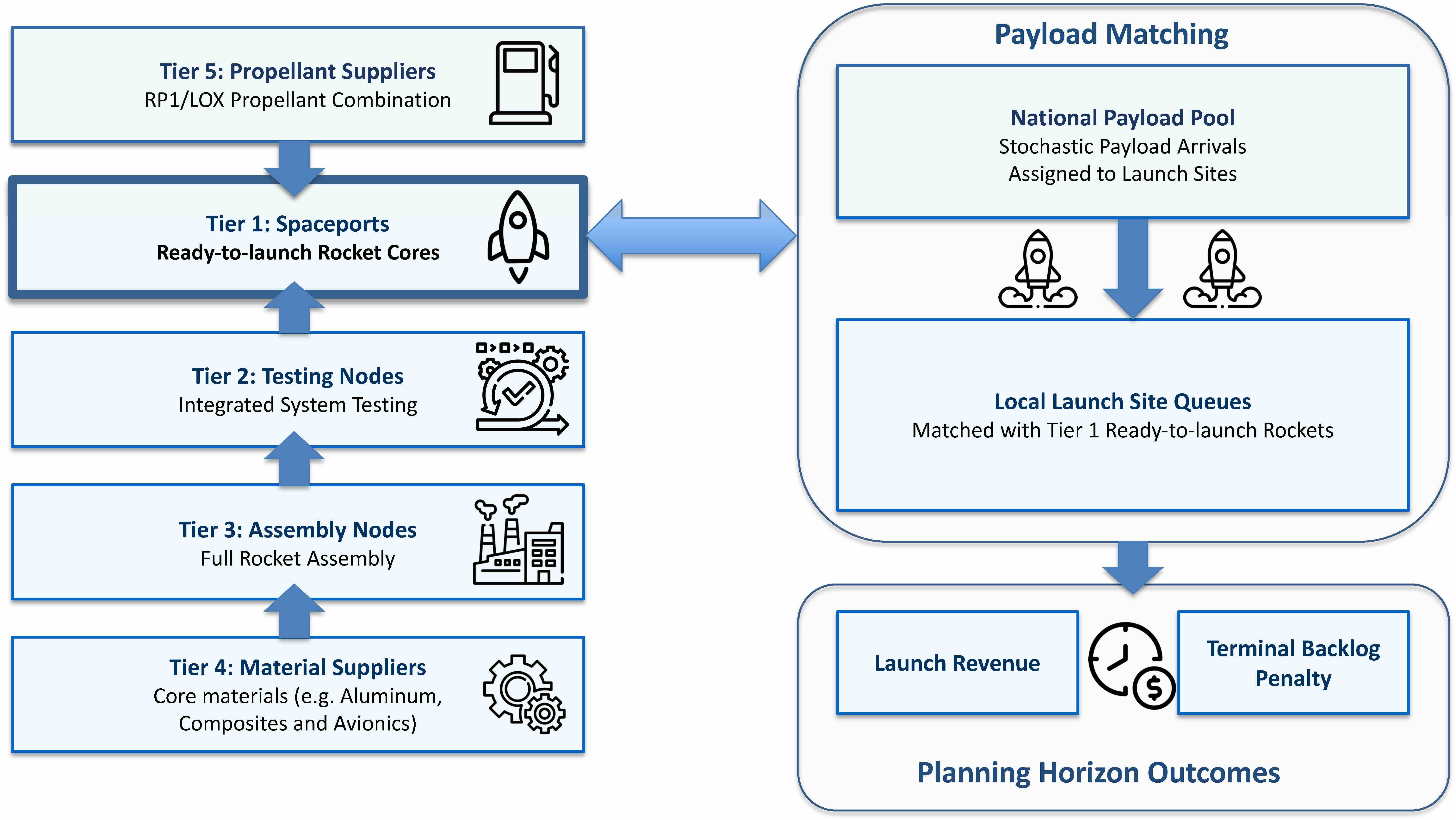
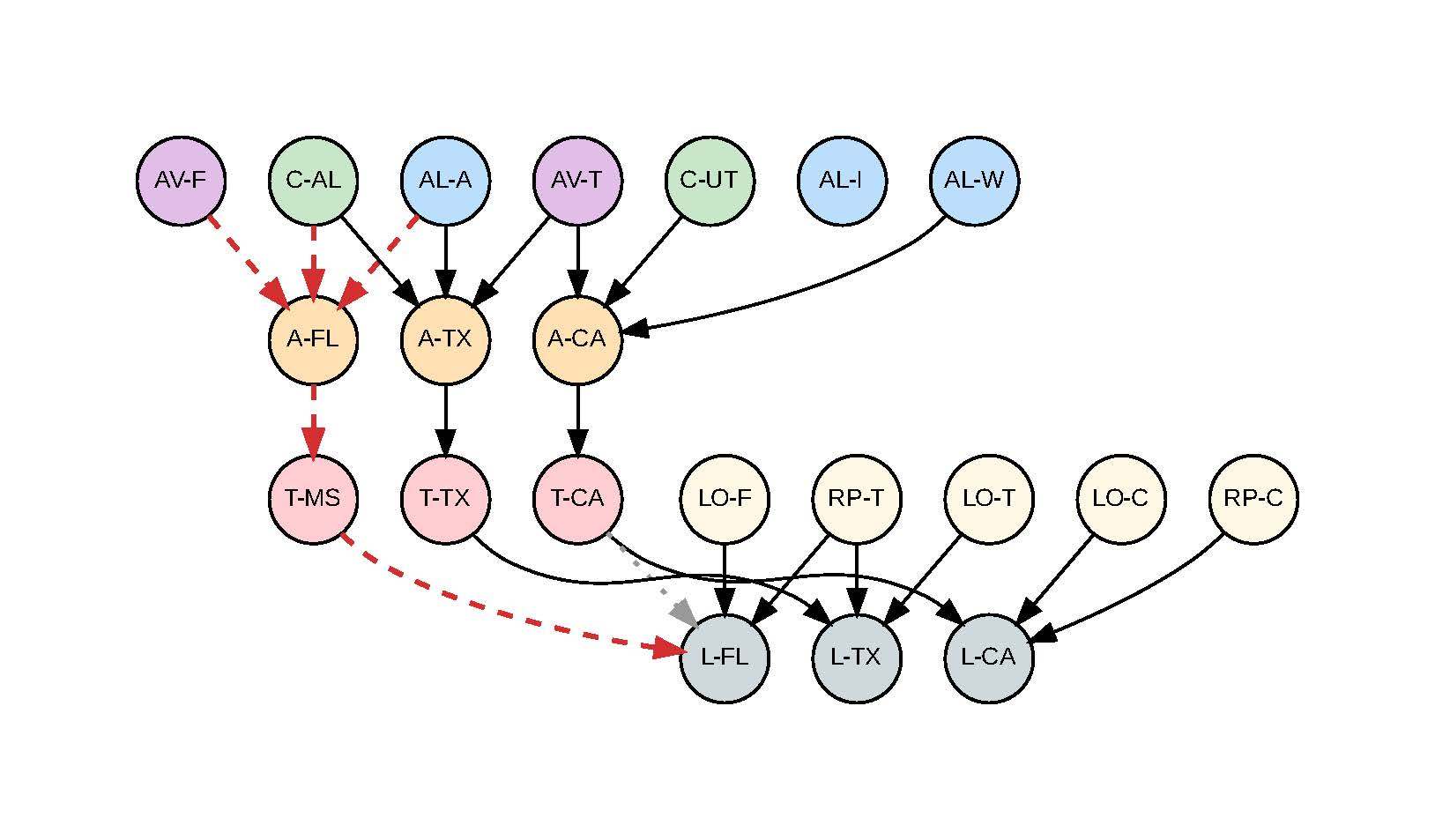
We are extending the previous work to other industries, such as space launching, and earth-to-orbit supply chains for in-space data centers. The work is ongoing and we are collaborating with Profs. Max Li (AERO), Jun Li (Ross), Ruiwei Jiang (IOE), Xun Huan (ME), Nathan Bleier (CSE) to design pathways for future in-space data centers at scale. The work is supported by the U of Michigan OVPR through their Bold Challenge Boost Award.
Bilevel Integer Programming; Network Interdiction in Critial Infrastructure Systems (sponsor: AFOSR, ARO, NSF ECCS-2533775)
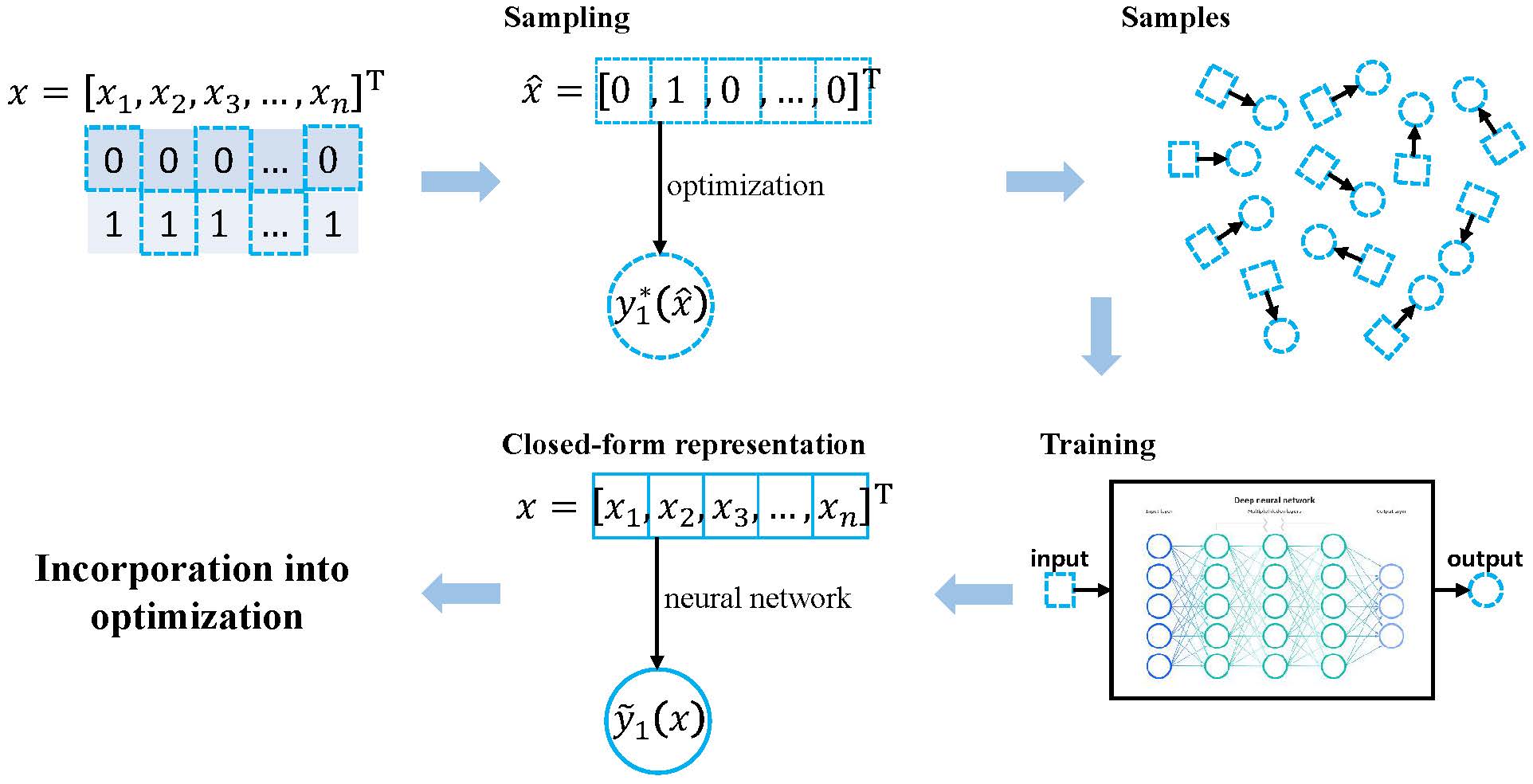
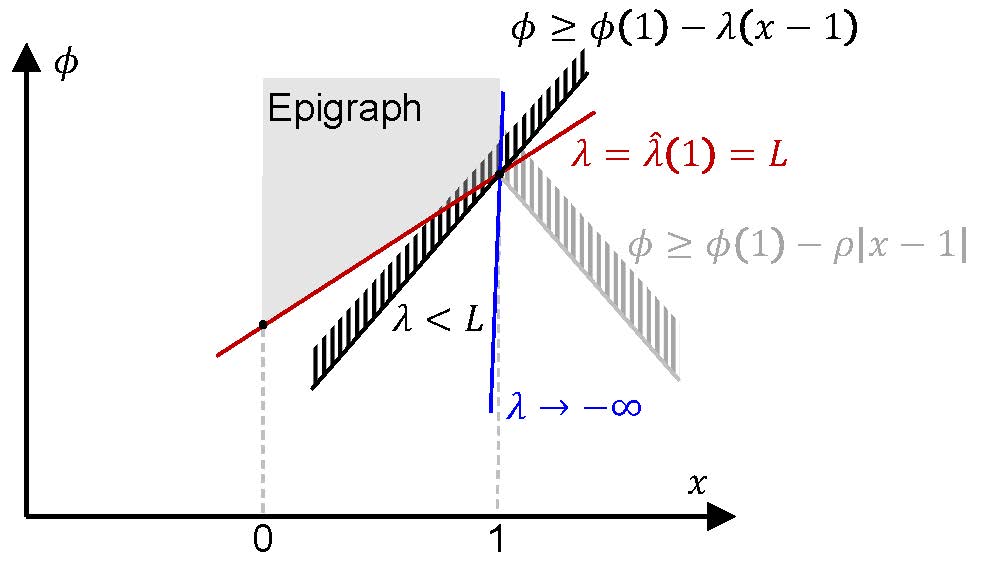
We consider sequential bilevel problems where the leader's or the follower's decision variables are discrete or mixed-integer and seek effective algorithms for optimizing solutions to these nonconvex problems. We use deep neural networks, and prove special properties such as supermodularity and submodularity (under certain conditions) for deriving valid inqualities and cutting-plane algorithms. We demonstrate the results over a diverse set of bilevel integer programs and network interdiction problems with mixed-integer attacker or defender's decisions.
(Collaborator: Ruiwei Jiang in IOE at U of Michigan)
Vehicle Routing and Scheduling; Dynamic Inspection; Mobility System Design and Optimization (sponsors: NSF CMMI-1636876, CMMI-1727618, CMMI-2041745, Ford-UM Alliance Program)

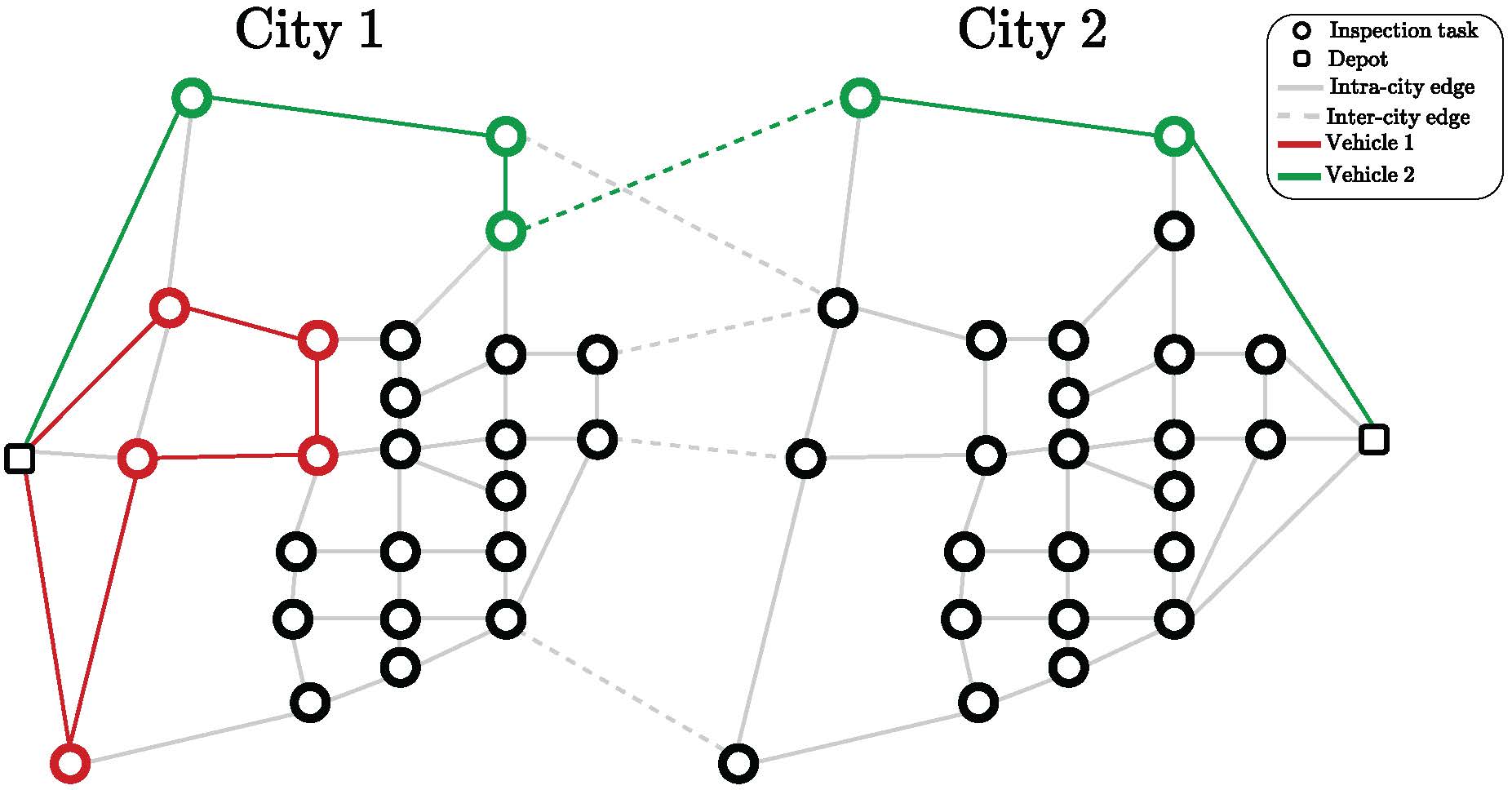
We consider vehicle routing, on-emand matching, service scheduling, as well as dynamic inspection problems under the spacial-temporal uncertainty of supply and demand, and sometimes also with stochastic travel and service time. We use mixed-integer programming formulations and spatial-temporal networks to model these systems and analyze related operations. We formulate stochastic dynamic programming models and/or use reinforcement learning to optimize real-time operations. We develop decomposition-based cutting-plane algorithms for speeding up computation and solving these models for real-world sized problems. We test our models and demonstrate results on a wide range of infrastructure and mobility systems, including carsharing, ridesharing, and public transit systems.
(Collaborators: Viswanath Nagarajan at U of Michigan; Mengshi Lu at Purdue University)
Older Works
Load Control Optimization in Sustainable Power Systems; Power Stabilization under Contingency (sponsor: NSF CMMI-1442495, ECCS-1709094)
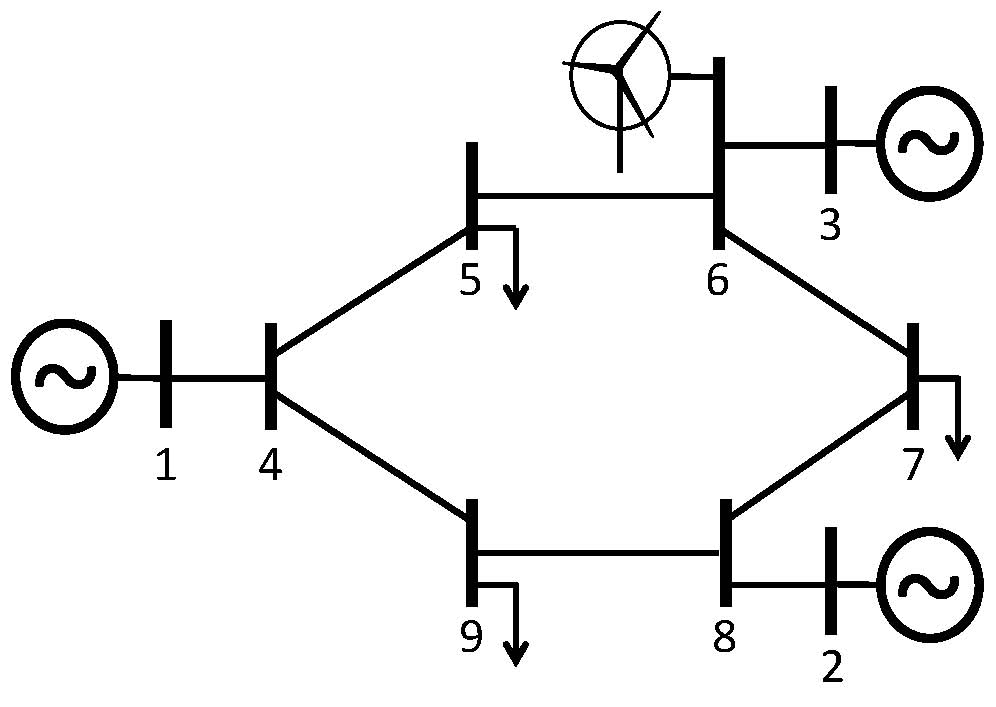 |
With increasing penetrations of fluctuating renewable energy sources, such as wind power plants and solar photovoltaics, and active participation of electric loads in power system operation, uncertainty will increase. Specifically, we develop data-driven and distribution-free optimization methods that are suited to dispatching power systems with both fluctuating renewable energy sources and flexible loads contributing to balancing reserves via load control. The flexibility of an aggregation of loads is difficult to compute and uncertain. Investigating, characterizing, and managing this uncertainty is the focus of this research. Moreover, we quantify the tradeoff between the uncertainty and profitability of load control, and the effect of uncertainty and methods for managing it on power system dispatch, which affects pollutant emissions. |
(Collaborators: Johanna L. Mathieu and Ian A. Hiskens in EECS, Ruiwei Jiang in IOE at U of Michigan)
Decomposition Algorithms, Large-Scale Optimization, and Parallel Computing (sponsor: DoE Early Career Grant, DE-SC0018018)

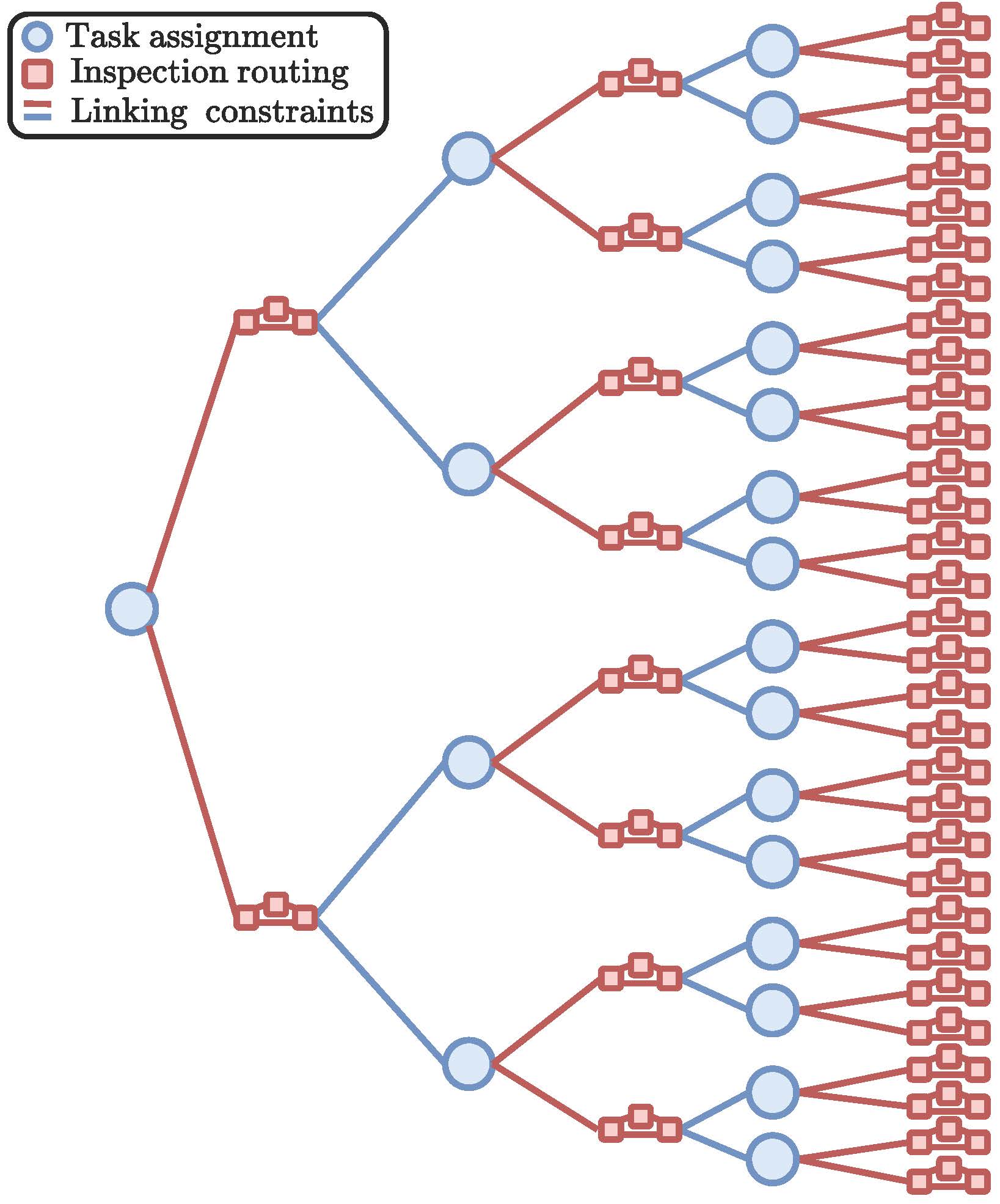
We develop new decomposition paradigms for stochastic integer programming models, and generate more effective cutting planes and objective bounds. We focus on two-stage stochastic integer programs, and advance decomposition paradigms based on special structures of specific risk-averse programs, and also based on special integer-programming structures (e.g., totally unimodularity, special ordered sets of type 1 (SOS1), cover inequalities). We have implemented the related approaches in a series of research projects that optimize stochastic problems of (i) project management, (ii) resource allocation, (iii) appointment scheduling, and (iv) network interdiction. Moreover, the new decomposition paradigms can be widely applied to large-scale complex system design and operations management, including optimizing critical interdependent infrastructures such as power grids, transportation systems, and cyber-clouds.
Risk Management under Ambiguous Decision Preferences (sponsor: NSF CMMI-1433066)
We develop modeling techniques and computational paradigms for complex service systems that need to correlate a variety of information and decisions. We design risk optimization approaches that are capable of handling integrated system design and service operations with multiple resources, multiple stages of service, and multiple stakeholders with diverse decision preferences under data uncertainty.
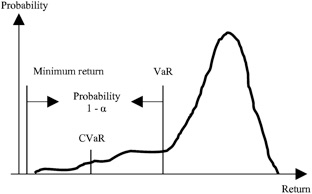
One of the risk-averse stochastic optimization models we consider is called chance-constrained program (CCP), which bounds the probability of the occurrence of undesirable random outcomes. Given constraint A x >= b with either matrix A or vector b (or both) being random, a chance constraint reads: Pr(Ax >= b) >= 1-\alpha, where 1-\alpha represents a required reliability level. We analyze a multi-objective CCP variant that considers the reliability 1-\alpha as a decision variable, and trades off between the original objective cost and the “cost of reputation” associated with the quality of service given by 1-\alpha.
Instead of parametric analysis, we develop integer-programming-based approaches to study:
 |
|
Please see Michigan Experts for a list of ongoing and completed projects by Shen's group.
Acknowledgement
We thank the following agencies/organizations for supporting our research and education activities.
 |
National Science Foundation |
 |
Department of Energy |
 |
Department of Defense, Army Research Office |
 |
USDOT Center for Connected Automated Transportation (CCAT) |
 |
Ford Motor Company |
 |
IBM |
 |
Procter & Gamble |
 |
DiDi ChuXing |
 |
Microsoft |
 |