News from Wallace House Archives
The Luxury to Experiment
By Charles R. Eisendrath ’75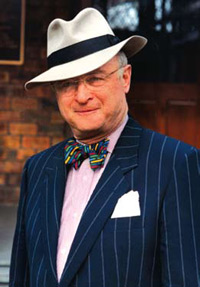
Charles R. Eisendrath ’75
First, an in memorium for two of the most important people in the development of journalism fellowships at Michigan.
Margaret DeMuth served all three directors, during which time the program also changed its name from Journalists in Residence to Michigan Journalism Fellows. (Knight-Wallace came later.) The personalities and approaches were all different and the program itself morphed over time, although the basics and aims remained constant.
Preserving and enhancing the most important things was Margaret’s stock in trade. A hassle with University regulations? Call Margaret. Make sure international Fellows felt at home right away? Margaret would be on the case before anyone asked. A difference of opinion, sometimes heated? Margaret’s balm calmed the waters.
Forty-nine days after Margaret died January 2, we also lost Graham Hovey. I had served on the committee that selected him as director 1980. In 1985, we workedtogether to begin the fundraising drive that ultimately fully endowed the program.
The range, breadth and depth of Graham’s professional career enriched the lives of the six classes he supervised. He covered local politics and the largest conflagration in world history, worked as a reporter and editorialist at a wire service, a national magazine and a succession of newspapers leading to the New York Times. Among his gifts was an easy ability to make that wealth of experience accessible and relevant.
Mary Jean, his partner for 68 years, has welcomed the calls and notes from all over the world. So has Dr. George DeMuth who shared a long life with Margaret. When considering new directions for the program, I often think of how Margaret and Graham would react. Death, I find, is no impediment to this kind of communication. I consult their memories.
* * *
In a year of cutbacks in journalism, journalism education and journalism fellowships, it has been a singular pleasure to find ourselves in position to experiment and expand. For this we have to thank two groups of people. First, a roster of endowment donors who believe in the mission: of providing large resources to a small number of people to help them grow professionally and personally. Second, the University’s financial team, who instituted a system for basing payout from endowment on a seven-year average of its market value. One result: as the actual value of our capital fell (although not nearly as far as that of many other universities), KWF’s income increased.
We decided to use this relative advantage to further enrich the learning process and to tailor it more closely to the needs of the profession.
Last November 10–13, Regina McCombs and Kenny Irby of the Poynter Institute conducted a series of training sessions for ’10 designed by Assistant Director Birgit Rieck and held in the Duderstadt Media Center. The idea wasn’t to make everyone multi-platform performers, but to show all concerned that the gizmos were neither scary nor bedeviling.
Part of the message arrived in the form of gifts. For a surprisingly modest investment, KWF presented each member of ’10 with a carry bag containing a video camera, audio recorder and the necessary supplementary gear. Without the equipment they had trained with, we reasoned, neither hardware or instruction would maximize benefit. Judging from the experimentation already underway, the approach works.
Brazil was added to the South America itinerary through Helio Schwartsman ’09 of Folha de São Paulo. During the Moscow news tour last year, he asked why KWF never traveled to Brazil en route home from Argentina.
Was that an invitation?, I asked. The five-day stopover in São Paulo became the third international trip (in addition to Istanbul and Moscow) negotiated by alumni. In that I take particular pride because it speaks most eloquently of how much international Fellows value the experience.
Soon after the holiday break, Lynette Clemetson ’10 took me aside.
What about the entrepreneurship training we had discussed last fall? Good question. At a Wallace House lunch, Jim Price, a Business School professor whose class she had enjoyed, laid out how he might custom-tailor training for journalists to survive the ongoing revolution in our profession. At the next seminar, I asked for a show of hands from those who might be interested. Six, I thought, would justify the cost. Instead, nearly everyone wanted in.