 ���������������������������������������
 �(A12)
� To show
�����������������������������������������������������������������
���������������������������������������
�(A12)
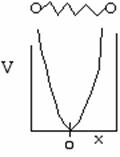
����� Again we solve the wave equation for two molecules undergoing oscillation about an equilibrium position x = 0. The potential energy is shown below as a function of the displacement from the equilibrium position x = 0 (A5p402)
�������������������������������������������������������������� 
����� The uncertainty principle says that we cannot know exactly where the particle is located. Therefore zero frequency of vibration in the ground state, i.e. u = 0 is not an option (A5p402 and pA22). When vo is the frequency of vibration, the ground state energy is
���������������������������������������������������������������������
 �������������������������������������������������������������
(V1)
�������������������������������������������������������������
(V1)
����� Harmonic oscillator (A5p402)
����� Spring Force  �potential
energy from equilibrium position x = 0
�potential
energy from equilibrium position x = 0
�������������������������������������������������������������������

����� the solution is of the form for t=0 then x=0
�����������������������������������������������������������������

����� where
����������������������������������������������������������������������

����������������������������������������

����� The potential energy is
���������������������������������������������������������������������
 �������������������������������������������������������������
(V2)
�������������������������������������������������������������
(V2)
����� We now want to show
����������������������������������������������������������������
 ��������������������������������������������������������
(V3)
��������������������������������������������������������
(V3)
����� We now solve the wave equation:
������������������������������������������������������  ����������������������������������������������
(V4)
����������������������������������������������
(V4)
����� to find the allowable
energies,  .
.
����� Let  ,
,
 , where
  ,
,
 , and
, and 
����� With these changes of variables Eqn. (A15) becomes
�������������������������������������������������������������  �����������������������������������������������������
(V5)
�����������������������������������������������������
(V5)
����� The solutions to this equation (A5 pA22, i.e., Appendix 8)will go to infinity unless
����������������������������������������������������������������������
= 2 +1
+1
����������������������������������������������������������������
= 0, 1, 2, 3 . . .
����������������������������������������  �����������
[c = speed of light]
�����������
[c = speed of light]
����������������������������������� 
�����������������������������������������������������������������
 = wave length
����������������������������������������������������  ���������������������������������������������
(V6)
���������������������������������������������
(V6)
����� Measuring energy relative to the zero point vibration
frequency, i.e., = 0
���������������������������������������������������������� 
����� Substituting for  �in
the partition function summation
�in
the partition function summation 
����������������������������������������������������� 
|
���������� ������������������������������������������������������������������

��������������������������������������������� ��������������������������
(V7)
��������������������������
(V7)
����� For  ,
we can make the approximation
,
we can make the approximation
����������������������������������������������������������������
 ��������������������������������������������������������
(V8)
��������������������������������������������������������
(V8)
����� For m multiple frequencies of vibration
������������������������������������������������������������ 
����� Order of Magnitude and Representative Values
����� For H2O�
we have three vibrational frequencies with corresponding wave numbers,  .
.
������������������������������������������������

������������������������������������������������ 
����� and
������������������������������������������������ 
��������������������������������������������������� 
�
Return to Transition State Theory